
MICA GRAPHIC DESIGN THESIS SHOW 2023
Celestial System Thesis Exhibition
Designed an exhibition identity system that connected diverse creative voices through a shared visual language, unifying over 80 student projects into a cohesive experience.
Role
Graphic Designer
Team
6 Designers
Supervisor
Kristian Bjornard
Timeline
March–May 2023
Tool Used




Overview
What is Celestial System?
Celestial System is a thesis exhibition that committed to display the individual’s uniqueness and the connection of a disparate array of projects for students majoring MICA 2023 Graphic Design program. Designers use different icons to represent each category students explored. Celestial system unites different talented stars together to convey a creative, consistent, and compelling voice to the audience.
My Role
As the Graphic Designer on a six-person team, I led the design of the logo, catalog, and website for MICA's 2023 Graphic Design thesis exhibition, creating a cohesive visual identity that showcased the work of over 80 graduating students.
VISUAL IDENTITY
Develop a scalable visual identity system
I created a generative visual language that combines medium, personal values, and initials to produce unique symbols for each graduating designer while maintaining a cohesive exhibition brand. By combining three personal attributes, every student received a unique visual identifier within the larger identity system.

Each student's pattern was generated based on their full name and initials. We selected symbols according to their creative medium, assigned a value that reflected their work, and used their initials to determine the final visual composition.

DESIGN SYSTEM
A neutral design system can help create space for student voices
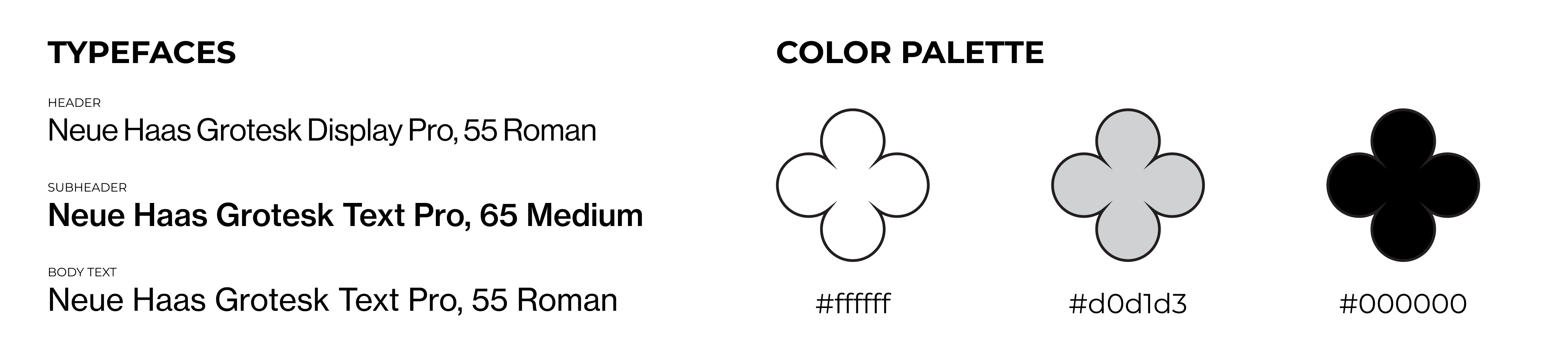
We selected a sans-serif typeface and a neutral black, white, and gray palette to keep the visual identity understated, ensuring that the focus remained on the work of the 80 graduating students rather than the exhibition design itself.
PATTERN COMBINATIONS
Pattern combination is the key to connect individual identities
After defining the visual identity and design system, our team explored how individual patterns could be connected while maintaining both uniqueness and cohesion. I developed three approaches: linking patterns through students' last names, geometric forms, and letter-based arrangements derived from the sequence of their initials.


Once the final arrangement system was established, we created a survey for all graduating students to gather information about their thesis medium, core values, and preferred arrangement layouts. Based on their selections, we developed customized visual identities that reflected both their individual work and the overall exhibition system.
CATALOG DESIGN
Apply the Identity System to the Catalog
To showcase every student's visual identity, we incorporated the pattern system throughout the catalog.
For the cover, we combined selected student patterns to create a unified constellation that represents the graduating class as a whole.

For the interior pages, we developed separate layouts for vertical and horizontal projects.
In the vertical layout, the project title and description are placed on the left side, while the student's pattern appears in the bottom-right corner. The project image then extends across the following page to maximize visual impact.


For horizontal projects, the title and description are positioned in the top-left corner, with the pattern placed in the top-right. The project images occupy the lower portion of the spread, creating a balanced and consistent reading experience.


EXHIBITION DESIGN
Extend the Identity into the Exhibition Space
We integrated the visual identity system throughout the exhibition environment to create a cohesive visitor experience.
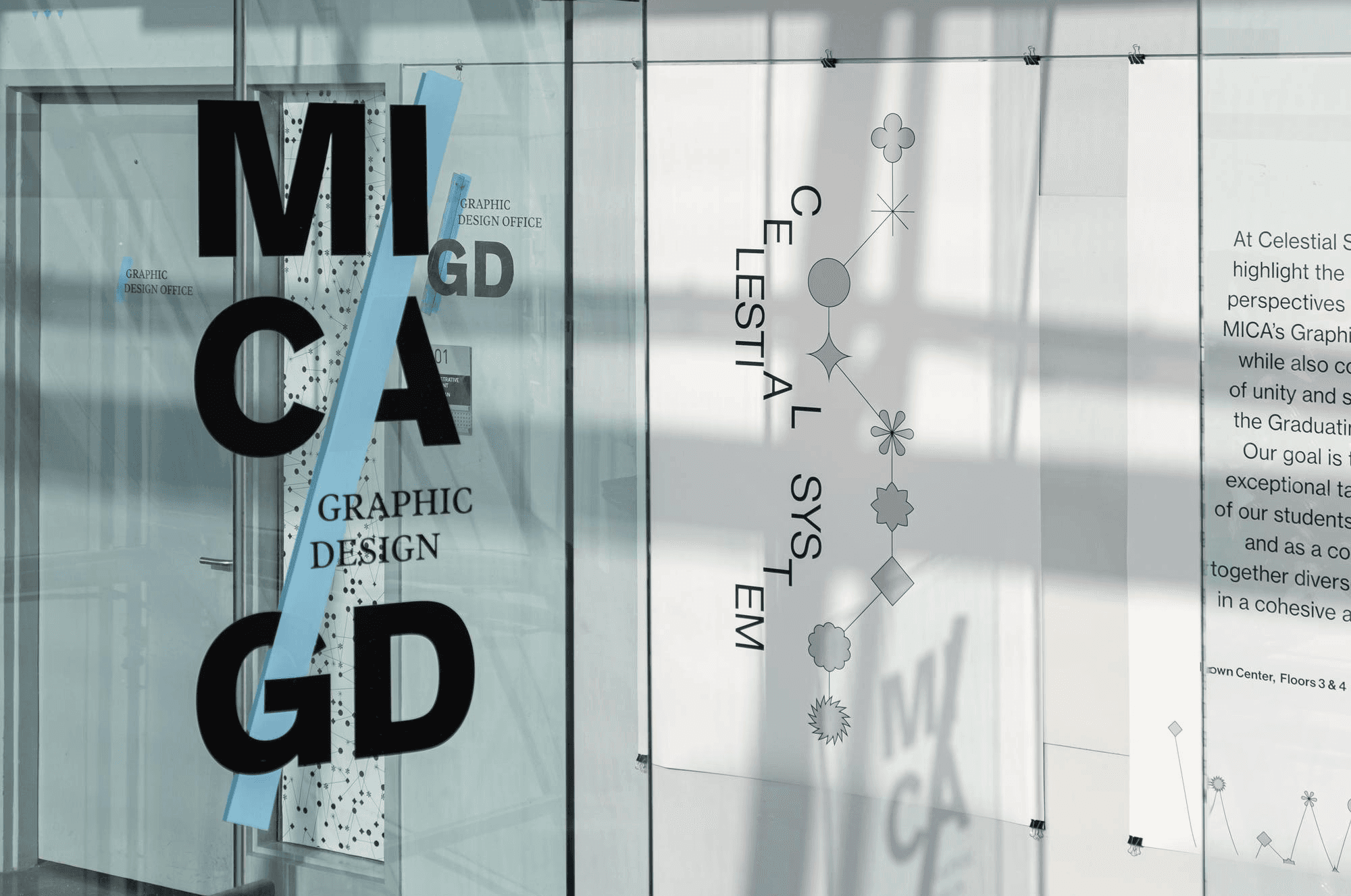
The exhibition spanned two floors, so we organized the space according to the creative mediums defined within our visual identity system. This helped visitors navigate the exhibition while reinforcing the overall structure of the brand.


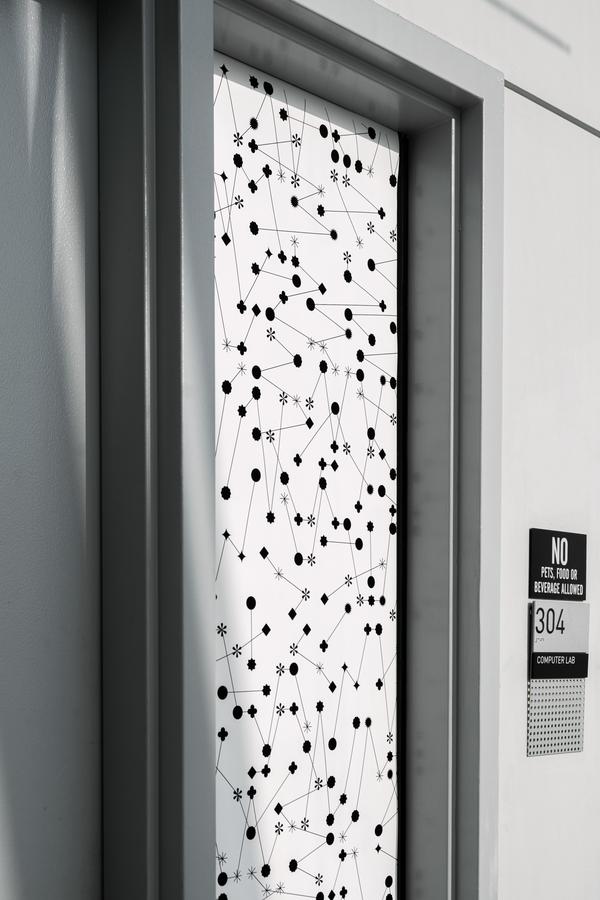
To improve wayfinding, we applied category labels directly to the floor, providing clear visual cues that guided visitors through different exhibition sections. We also extended the identity system to the glass panels outside each classroom, transforming functional spaces into branded touchpoints that connected the entire exhibition experience.


WEBSITE DESIGN
Bring the Exhibition Online
To extend the exhibition beyond the physical space, we designed a dedicated website where students could showcase their work online. The website carried the same visual language, typography, and constellation patterns, creating a seamless experience between the exhibition environment and its digital counterpart. It also served as a lasting archive of the graduating class and their projects.

BRAND COLLATERAL
Extend the Identity Through Collateral Design
I extended the visual identity to a collection of exhibition collateral, including postcards, apparel, bookmarks, ID badges, and tickets. By applying the constellation patterns across these materials, I created a cohesive brand experience that connected the exhibition, its participants, and its visitors.


SOCIAL MEDIA DESIGN
Pre-Exhibition Social Media Promotion
To build anticipation before the exhibition, we designed a series of Instagram posts that showcased the work of graduating students. Each student selected an image that best represented their thesis project, allowing their work to be introduced to the audience before the exhibition opened.
To maintain consistency with the exhibition identity, we adapted the second pattern arrangement system into a square frame format. This approach worked particularly well for Instagram, as the square composition aligned naturally with the platform's visual grid while reinforcing the exhibition's visual language.